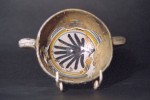
The Etruscan civilization that inhabited central Italy for centuries had a fairly modern organization, socially, militarily, and politically. At the time, a league of 12 major Etruscan cities existed in Italy, spanning an area from Volterra to Cerveteri.
The latest finds at the Campo della Fiera archaeological site, on the slopes of the Orvieto cliff, demonstrate that this Umbrian city was one of the most important of the “Etruscan twelve-city” and the site of the famous Fanum Voltumnae, the federal sanctuary of the entire Etruscan league.
Besides being one of the most important Etruscan cities, Orvieto was also the last Etruscan city to be conquered by the Romans. Thanks to its unique elevated position, the natural fortification of the imposing tuff cliff, and a solid surrounding wall (a portion of which is still visible today, upon reservation, and is located near Via della Cava, close to the ancient Porta Maggiore), Orvieto (then “Velzna” to the Etruscans and “Volsinii” to the Romans) put up a long and strenuous defense against the attacks of the strong Roman army.
Finally, in 264 BC, after several months of siege, the Romans managed to conquer the city. Having realized the difficulties of the conquest, they then decided to deport the population to nearby Volsinii Novi (Bolsena) and leave the cliff in complete isolation and abandonment.
For years, the cliff of Orvieto endured a long period of ghostly desolation; only the countryside and the areas along the Paglia and Tiber rivers remained active.
For this reason, today in Orvieto the few traces left by Roman civilization They are very rare on the cliff while they are found in the areas below (for example the thermal plant near the Campo della Fiera excavation area) or in neighbouring areas (Porto di Pagliano, Fornace di Scoppieto).